
Connecting People
to the Land


We Seek to Enhance Humanity’s Vital Relationship with Nature
through environmental education, restoration initiatives, and low-impact recreational opportunities for the public.
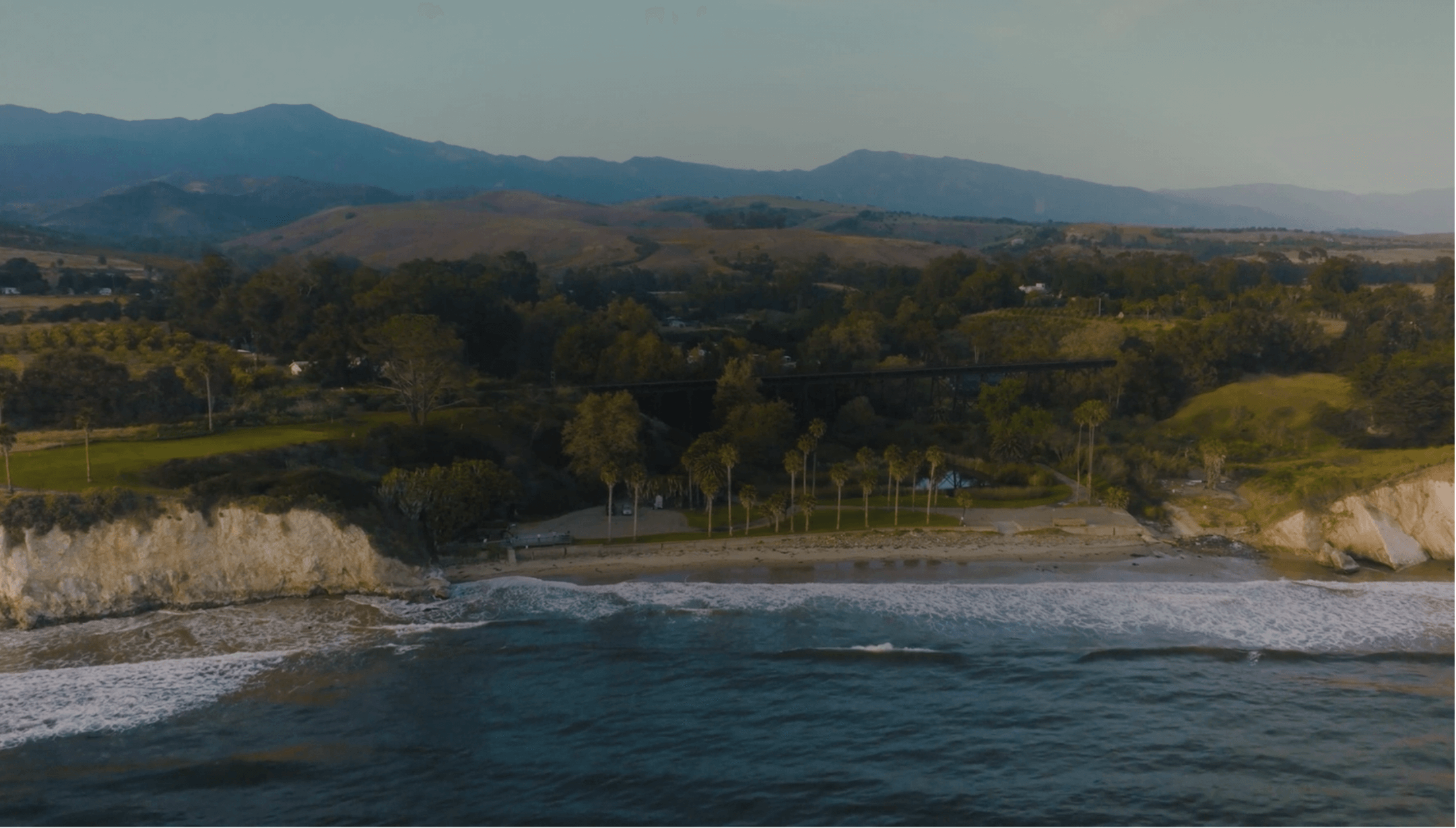
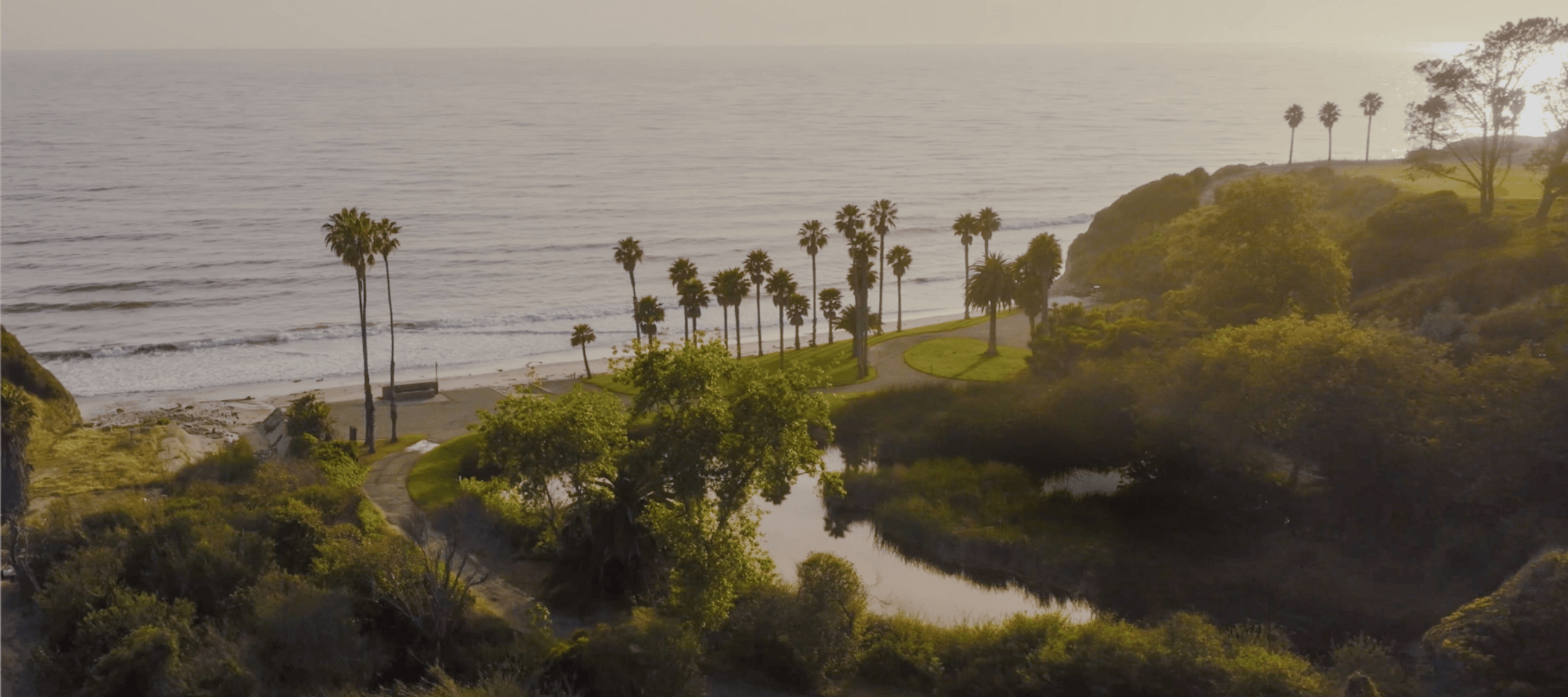
Situated on the Gaviota Coast just north of Santa Barbara, Dos Pueblos Ranch holds significant historical and environmental importance in California. Originally inhabited by the Indigenous Chumash, it marks the site of the first encounter in 1542 between the Spanish explorer Cabrillo and the indigenous tribes, often referred to as the place "where California was born." The name Dos Pueblos refers to the two Chumash villages situated on either side of what is now Dos Pueblos Creek. Over the past five centuries, the ranch and its surroundings have witnessed significant environmental and cultural changes.
The ranch boasts a remarkable biodiversity, featuring pastures, a year-round stream flowing into the ocean, and coastal tidal zones due to its vital watershed. Throughout its history, Dos Pueblos Ranch has served various purposes, including agriculture, cattle and dairy farming, prestigious racehorse breeding, and even once being the world's largest orchid farm. The land has yielded edible crops such as citrus, macadamia nuts, grapes, avocados, and cherimoyas.
Regrettably, the 200-plus-acre property has suffered neglect over the years, leading to the deterioration of many of its buildings. Our aspiration is to reverse this trend while respecting the Chumash heritage and transform the ranch into a public resource managed by the nonprofit Dos Pueblos Institute for the benefit of the community.
“We don’t inherit the earth from our ancestors, we borrow it from our children.”
– CHIEF SEATTLE

About Us
We believe that experience, common sense, and current social and scientifically documented trends show us that the human connection to the land is critically important for our health and happiness. When we are disconnected from the land we lose a fundamental piece of what we are as human beings and when we work to heal and experience the land we heal ourselves.
Dos Pueblos Institute, through our mission and our physical platform at Dos Pueblos Ranch, works to connect people to the land in a hands-on, experiential fashion via a variety of programs including outdoor education, public access, experimental regenerative agriculture and restoration programs and scientific and educational partnerships.
Our Initiatives


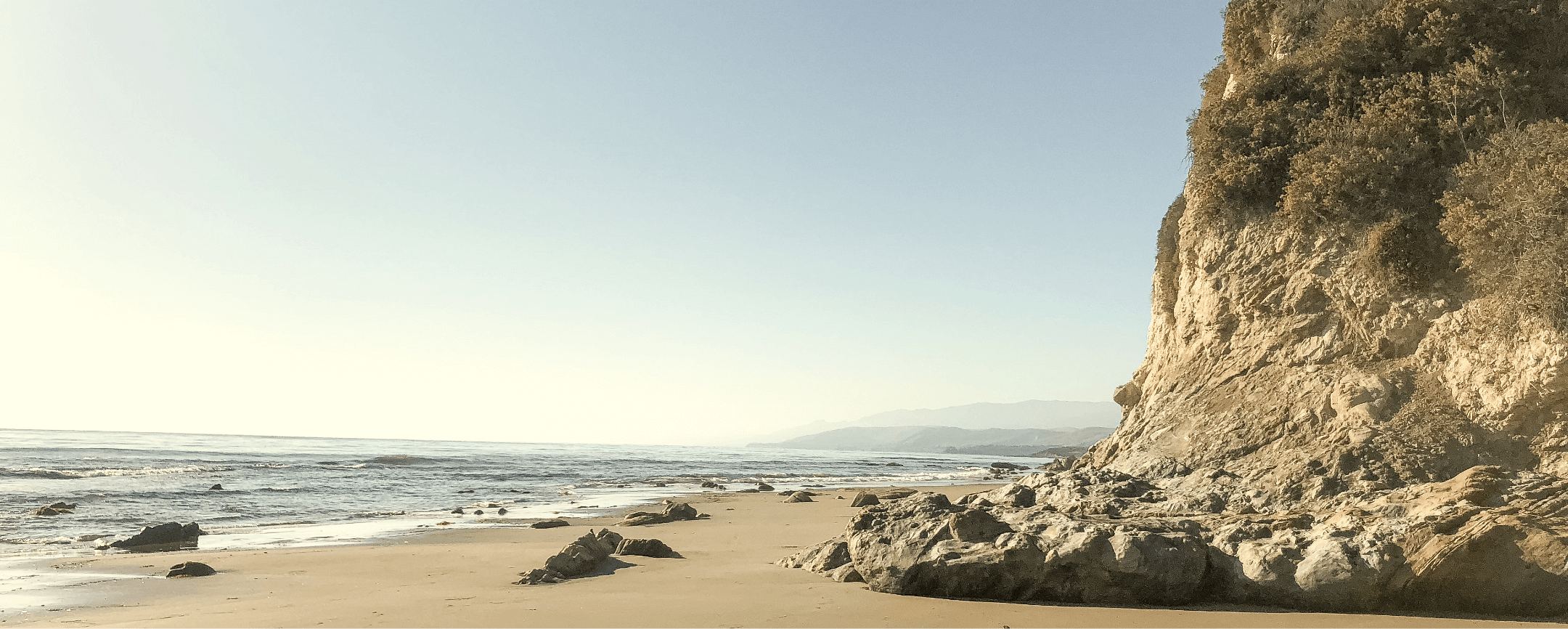
Photos by Nature Track
Outdoor Education
When we talk about “Connecting people to the land”, our belief at DPI is that the best way to do that is through a combination of simply being on the land, engaging our senses, disconnecting from our indoor and virtual world, and also approaching the land with intent, observation, learning and interaction. We host youth groups at Dos Pueblos Ranch in a manner that activates all of these elements, providing desperately needed Childhood Hours in Nature while exposing them to the history of the land, the challenges that we face due to climate change and, most of all, by having FUN!


Regenerative Agriculture
Dos Pueblos Institute is currently in the first phase of launching a regenerative agriculture program designed to provide an experiential learning approach for youth and other community members to participate in restoration of native grasslands, the creation of an indigenous plants area, and the commencement of a demonstration farm regenerative techniques and philosophies. This program will provide a context and curriculum to understand elements of climate change and potential answers for mitigating these critical challenges. Our current first phase includes soil analysis, vegetation survey and a regenerative grazing program using sheep, phase two will include master planning of the project area, launch of an organic composting operation, planting of native grasses for restoration, planting of an indigenous plants area with educational signage and paths, and the planting of a farm plot reflective of the realities of climate change.


Aquaculture
Established in 1989, the abalone farm sustainably raises the native red abalone through the entire life cycle from spawning and larval rearing in the on-site hatchery to the harvest and delivery of live market-size abalone. This unique facility offers an incredible foundation for continued efforts in species rehabilitation & restoration, regenerative aquaculture, and marine biology research.


Farm Tours
Come experience the wonder of sustainable seafood, nature and science at this iconic California landmark where we culture abalone and seaweed and ranch sea urchin. Get an insider’s look at our vibrant working farm and the processes that produce sustainable seafood, from spawning to harvest, learn about our collaborations with leading scientific institutions, and have the opportunity to purchase fresh seafood directly from the source.


Film Ranch
Dos Pueblos offers one of the most visually rich and unique locations on the California Coast for filming. Only two hours north of Los Angeles, and with a private beach, orchards, stables, and the stunning Ranch house, Dos Pueblos offers many beautiful backdrops for film and production projects. As well, the Dos Pueblos Film Ranch offers on-site production and meeting offices, production restroom rental, and high speed, fiber based internet connectivity.

Photo courtesy of California State Archives.
A Condensed History of
The Ranch at Dos Pueblos
The Chumash, original inhabitants of the Gaviota Coast, occupied two villages - Mikiw and Kuyamu - atop the bluffs to either side of the mouth of what is now known as Dos Pueblos Creek. On the 16th of October, 1542 two ships commanded by Juan Rodríguez Cabrillo anchored in the waters below these two villages, only weeks after his discovery of California in San Diego. According to history books the explorers were greeted by groups of Chumash canoes paddling out to exchange fish and chia sage flour for colored textiles and Venitian beads, but Cabrillo declined invitations to come ashore and his ships stayed only overnight setting sail at dawn the next morning. It would be 227 years before the Chumash would have another direct contact with European explorers.
-
In 1768 King Carlos III of Spain ordered the protection of Baja and Alta California from takeover by Russian otter hunters spotted in the area, and this Spanish mission was to be led by inspector general José de Gálvez. The plan laid out by Gálvez involved three objectives: to build presidios at strategic points along the coast to keep potential invaders at bay, establish a chain of Catholic missions to save the souls of the native population, and to colonize the country by offering subsidies of free land.
Gálvez ordered two expeditions - one by land and one by sea - northward from San Diego in search of the Bay of Monte Rey, previously discovered as a good harbor by Sebastián Vizcaíno in 1602. The land expedition led by Gaspar de Portolá left San Diego in mid-July of 1769 and arrived at the beach at the mouth of Dos Pueblos Creek on August 21st.
Rancho Dos Pueblos was eventually granted by governor Alvarado to an Irish immigrant named Nicholas Den, the first medical doctor in the Santa Barbara area, and over the following generations the land was subdivided first between family heirs and ultimately multiple times over and over as the resulting smaller ranches were bought and sold over the years.
Following the dynasty of Nicholas Den came financier John Williams, whose dream to recreate Naples, Italy on the west coast of California died when he did. Then came oilman Herbert Wylie, who stripped the Casa Grande to its bones and rebuilt it a hundred yards west of its original site. After Wylie was Samuel Mosher of Signal Gas and Oil company, who owned the property from 1943 to 1977 and turned it into a botanical showcase featuring the now separate Dos Pueblos Orchid Farm. After Mosher’s death, Rudolf Schulte purchased the property having made his fortune in medical devices, and it became his family compound. The chirimoyas lining the frontage road which can be seen from highway 101, are one of Schulte’s lasting touches on the ranch.
As the newest stewards of this cultural, historical, and environmental treasure, Dos Pueblos Institute is driven to restore and protect environmentally sensitive areas and the historical facilities of the ranch to as close as possible to their original condition. This restoration and resource protection work will serve as a continuation of the species rehabilitation and sustainable agriculture currently underway on the ranch, and a jumping off point for the institute’s work going forward in the fields of research, preservation and education.
“One touch of nature makes the whole world kin.”
– WILLIAM SHAKESPEARE
Featured News
-
![]()
Year End Wrap Up
The year has been one of dreaming and doing. We commenced the plan for our Western Fields regenerative agriculture and outdoor education project, including soil analysis, vegetation survey and a sustainable grazing program.
We have applied for multiple grants and have received two grants to support Phase Two of our Western Fields Project—the first grants awarded in our short history! The grants include a $25,000 conservation, trails and public access grant given by the Santa Barbara Foundation and a $60,000 Pollinator Habitat grant given by the Community Environmental Council which will assist us in planting hedgerows comprised of indigenous species to create habitat for pollinator species.
We have executed on property outdoor experience and education partnerships with five wonderful, local non-profit partners including Wilderness Youth Program, Sea League, R.E.A.C.H, Nature Track and Freedom for Youth.
We have delivered (since our inception) over 8,300 Childhood Hours in Nature (C.H.I.N.), getting kids outdoors, off their devices, and connecting them to the land.
We look back with gratitude on the year for our wonderful partners and allies and for the opportunity to help our fellow human beings connect to the land and in doing so to nurture themselves. We look forward to a 2024 that will be filled with exciting moments and tangible growth as we pursue our goals and we hope that you will join us along the way!
-
![]()
Butterfly Survey
Dos Pueblos Institute recently hosted volunteers from the Xerces Society for Invertebrate Conservation who visited the ranch in order to carry out a butterfly count of Winter nesting sites for the amazing Monarch Butterfly species.
The volunteers were thrilled to see a return of the species which has been under significant pressure from habitat loss and the volunteers recorded over 2,000 individual monarchs!
-
![]()
Western Fields Project Launch
Dos Pueblos Institute is thrilled to announce the launch of Phase One of our Western Fields Project. This project is intended to reconceive a portion of Dos Pueblos Ranch as a platform and model laboratory for regenerative agriculture, conservation and outdoor hands on education for youth and adult volunteers.
As in all of DPI’s programming, the Western Field Projects’ programs are intended to connect people to the land. Phase One includes soil analysis to establish baselines as to the soil health in the agricultural areas, a vegetation survey which DPI is executing in partnership with Cal State University Channel Islands in order to understand the presence of invasive and indigenous species, and a regenerative grazing program with Cuyama Lamb to remove fire fuel for community safety and to prepare the area for restoration and regenerative agriculture.
DPI has already executed the soil survey and the vegetation survey and the sheep are happily consuming invasive plants to prepare for our next phase!
-
![]()
Sea League
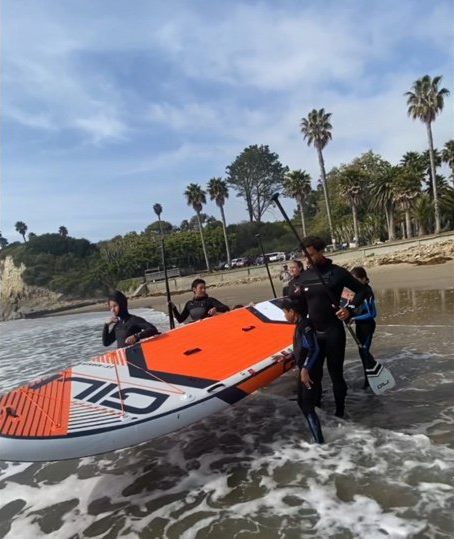
For our inaugural non-profit partnership, Dos Pueblos Institute was thrilled to welcome two wonderful non-profits, Brown Girl Surf based in Oakland, Ca., and Sea League based in Santa Barbara, Ca., for a day of ocean play and exploration at Dos Pueblos Ranch.
These two fantastic non-profits work to bring youth from communities which historically have not had access to ocean education and recreation out to the beach in order to gain experience and foster a connection to and understanding of the Ocean.
-
![]()
Wilderness Youth Project
Dos Pueblos Institute recently launched a programming partnership with local non-profit Wilderness Youth Program, whose mission is to “foster a life-long love of learning through outdoor experiences”.
WYP will bring after school program children and children from a number of local schools for day programs to explore and learn about or local coast and environment.



Contact Us
